If you came to CubersDen for 3×3 and Pyraminx, nothing changes for you. But if you have ever wanted to time a blind solve, write out a Fewest Moves solution, or race a 2-3-4 relay against a friend, the timer can do all of it now. Here is what each one does.
A picker in four blocks
Twenty-one events in one list is too many, so the puzzle menu now has four blocks: the cubes from 2×2 to 7×7 (with One-Handed next to 3×3), the other puzzles, the blindfolded events, and FMC with the relays. On a computer you see all of them at once; on a phone the block names are tabs. Hover a puzzle and its sessions show up next to it, the same as before.
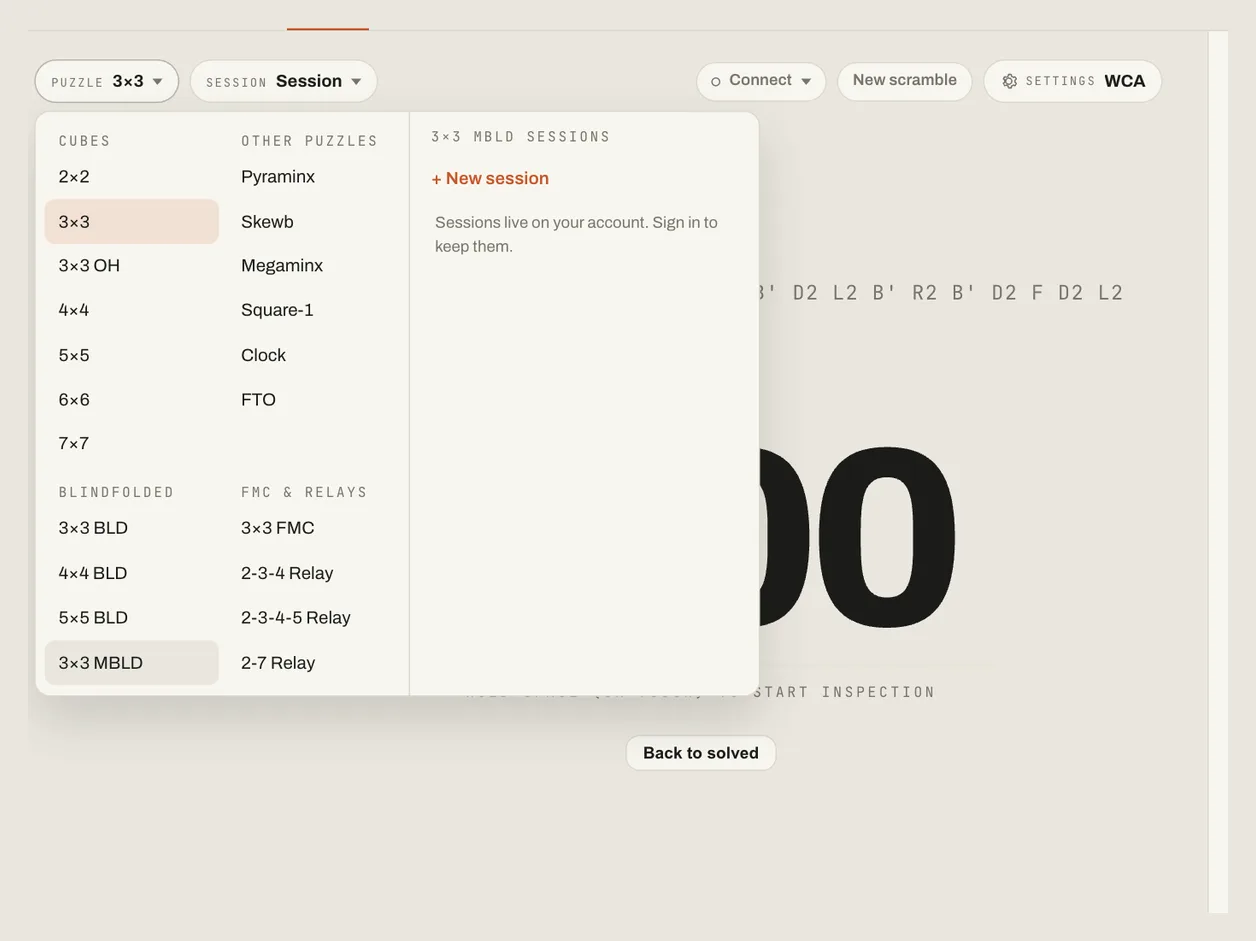
Blindfolded: 3×3, 4×4, 5×5
Blind events have no inspection, so the clock starts the moment you let go of the space bar. Press once when you put the blindfold on and start turning: that marks the end of your memorisation. Press again when the cube is solved. The result card shows the whole time and, under it, how long the memo took and how long the execution took. Over a session you can watch which half is getting faster.
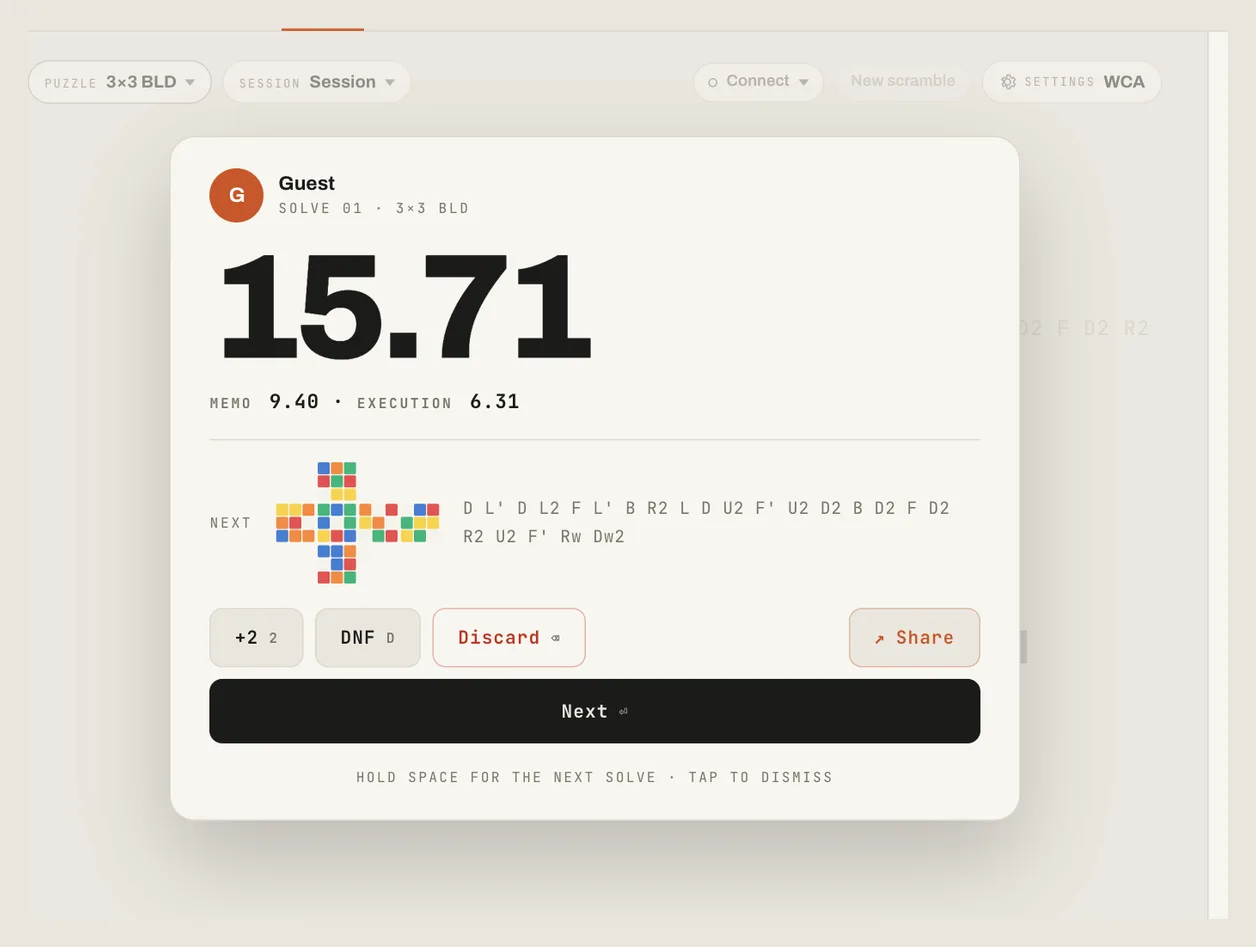
Blind events use a mean of 3, the way the WCA counts them, so the side panel shows mo3 instead of ao12 there, just like on 6×6 and 7×7.
Fewest Moves: an hour and a pencil
Fewest Moves is the odd one out: no clock to beat, just a scramble and sixty minutes to find the shortest solution you can. So the scramble stays hidden until you press Start the hour. Then the countdown runs and a box opens for your solution. Type it in and the box checks it as you write: how many moves it is, whether every move makes sense, and whether it really solves the cube. When it does, you can submit. If you run out of time or give up, the attempt is saved as a DNF, with whatever you had written, so you can come back to it.
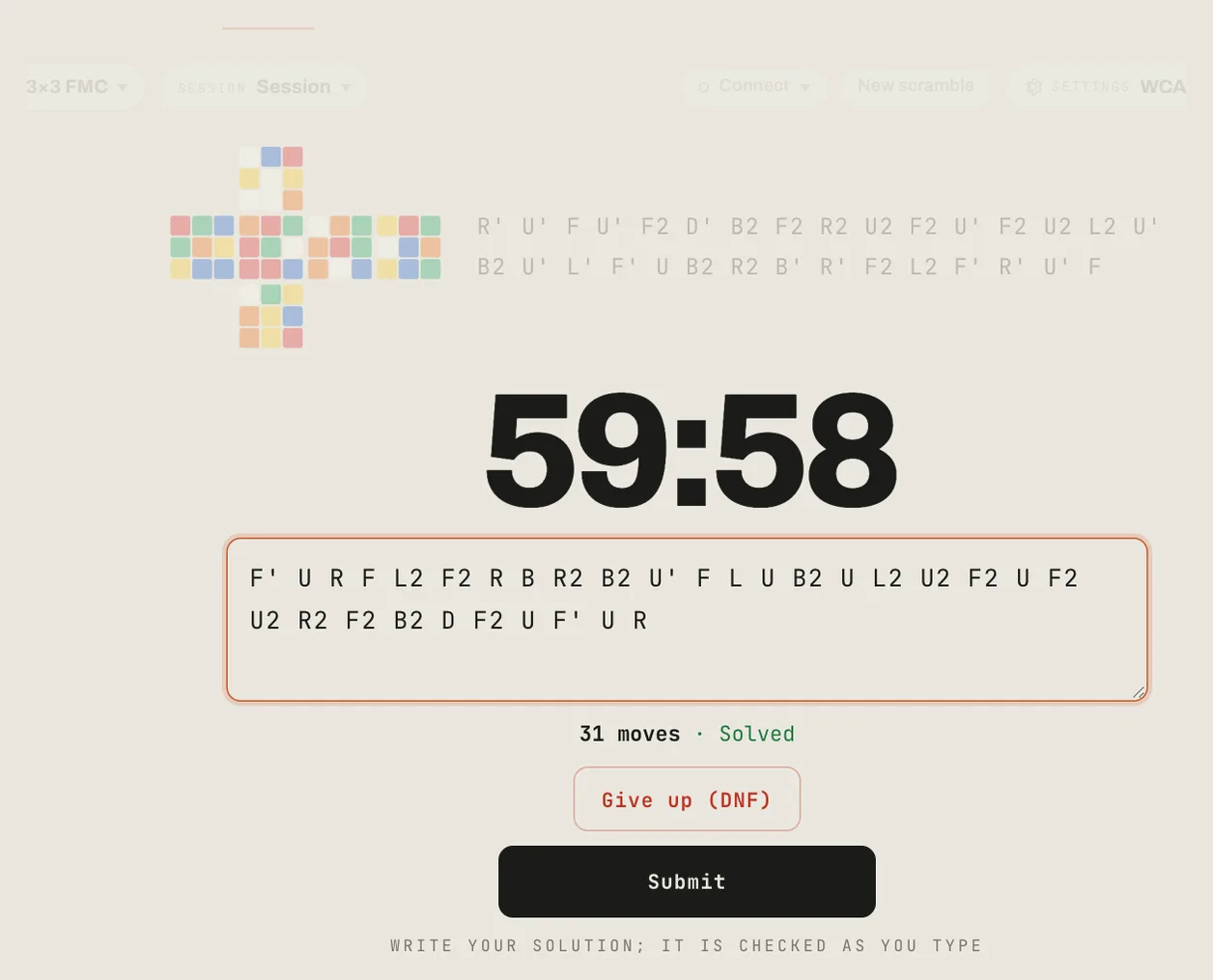
Your result is the number of moves, and your lists, profile and solve pages show it as moves, not as a time. A mean of 3 works the same as in competition.
Multi-Blind: as many cubes as you dare
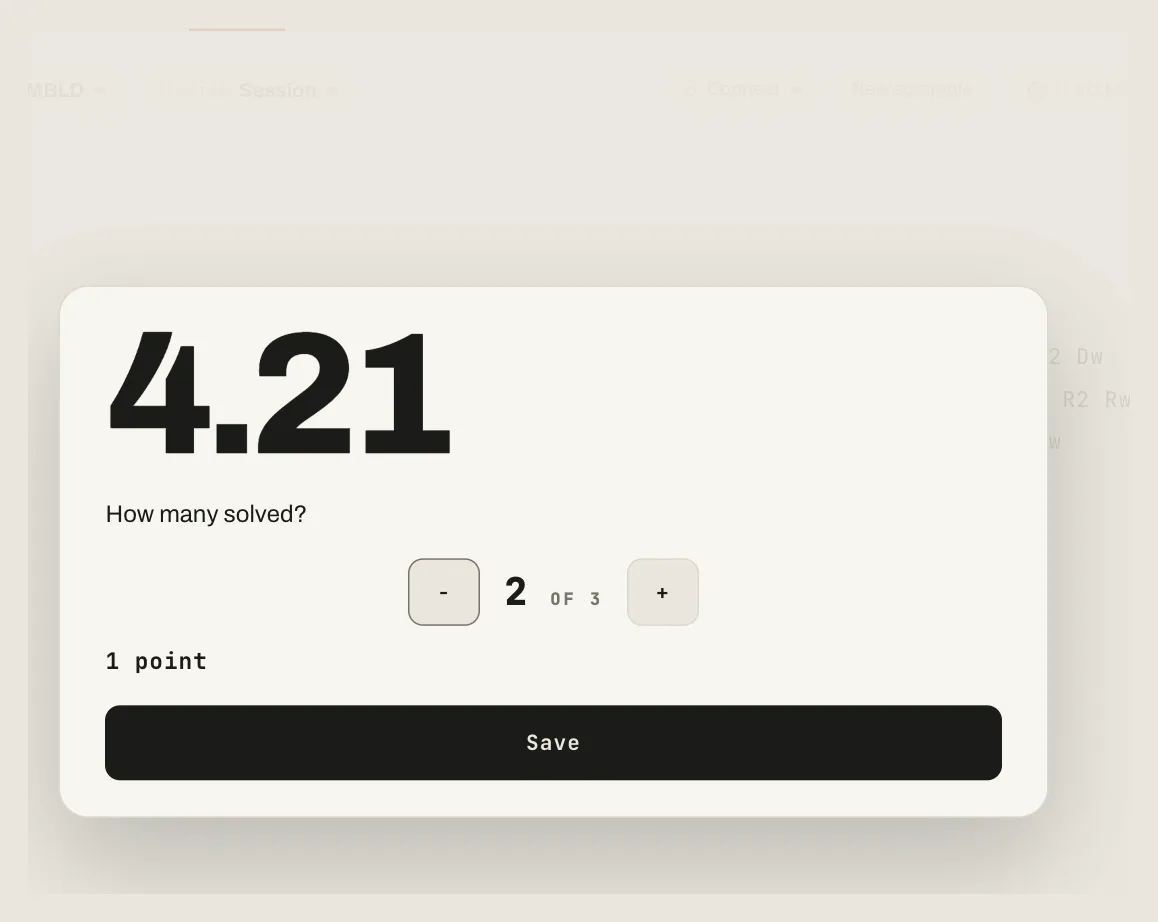
Pick how many cubes you are attempting, from two up. You get one scramble per cube, numbered, and one clock with the official limit: ten minutes per cube, an hour at most. When you stop, the timer asks how many you solved and shows your points: solved minus unsolved, with a DNF if fewer than half came out right. Your best attempt counts as your record, and the result reads the way the WCA writes it, like 5/6 in 42:10.
Relays: 2-3-4, 2-3-4-5 and 2-7
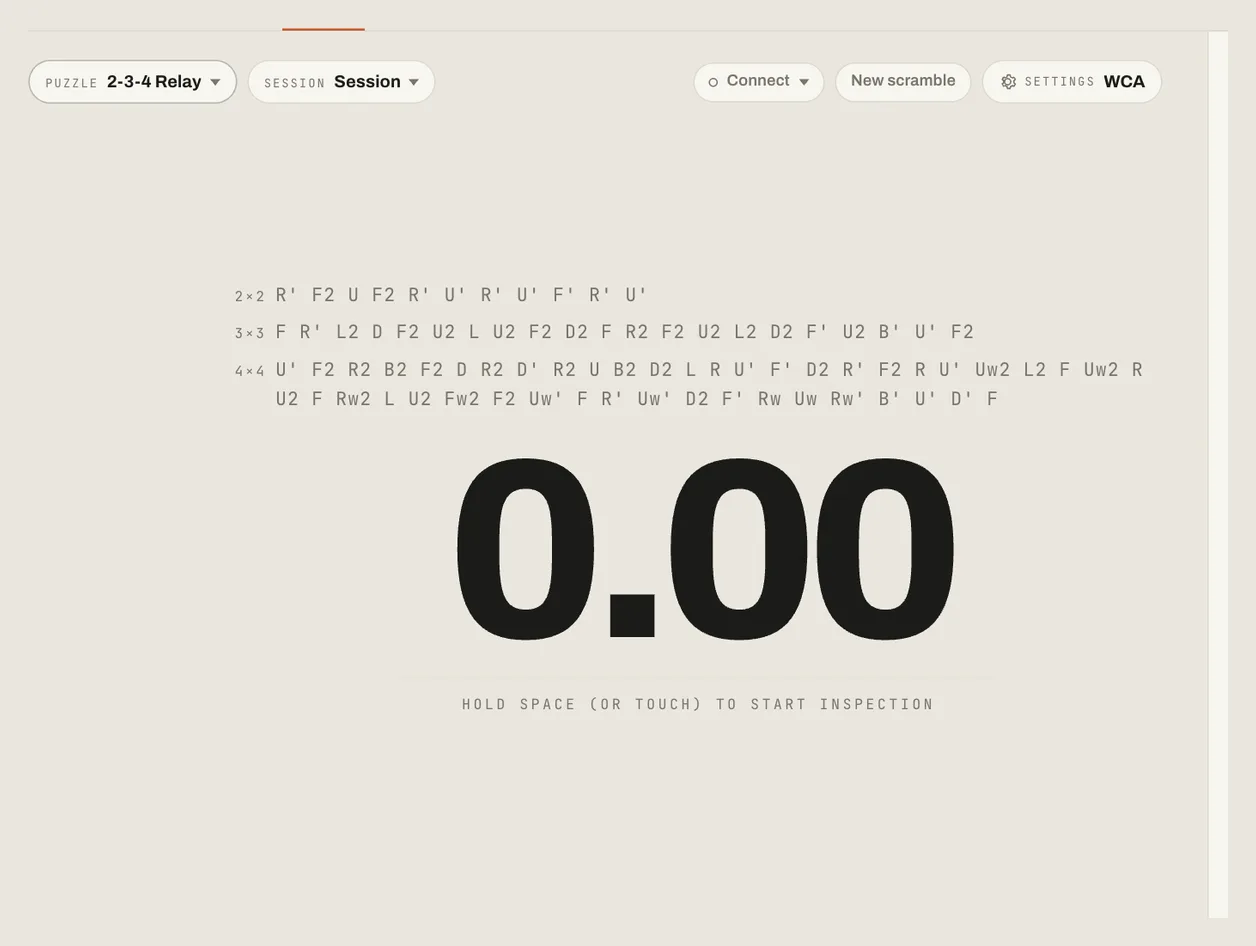
A relay is one time for a stack of cubes. Pick 2-3-4, 2-3-4-5 or the full 2 to 7, and the scramble card lists one scramble per cube, labelled. Inspection, averages and records work the way they do for any other timed event. These three are not official WCA events, but they are the ones people actually race, and they use the same names as csTimer so an import matches up.
Also new: 3×3 One-Handed
One-Handed got its own row next to 3×3 in the same update, with its own sessions and records, so your OH times stop mixing with your two-handed ones.
What is not there yet
The iPhone, Android and Apple TV apps still show these sessions as 3×3 for now; they get the new events in their next update. Importing FMC and Multi-Blind sessions from csTimer is also still on the list. If you try the new events and something feels off, tell us on the Discord. The blind and FMC people among you know these rules better than any of us.